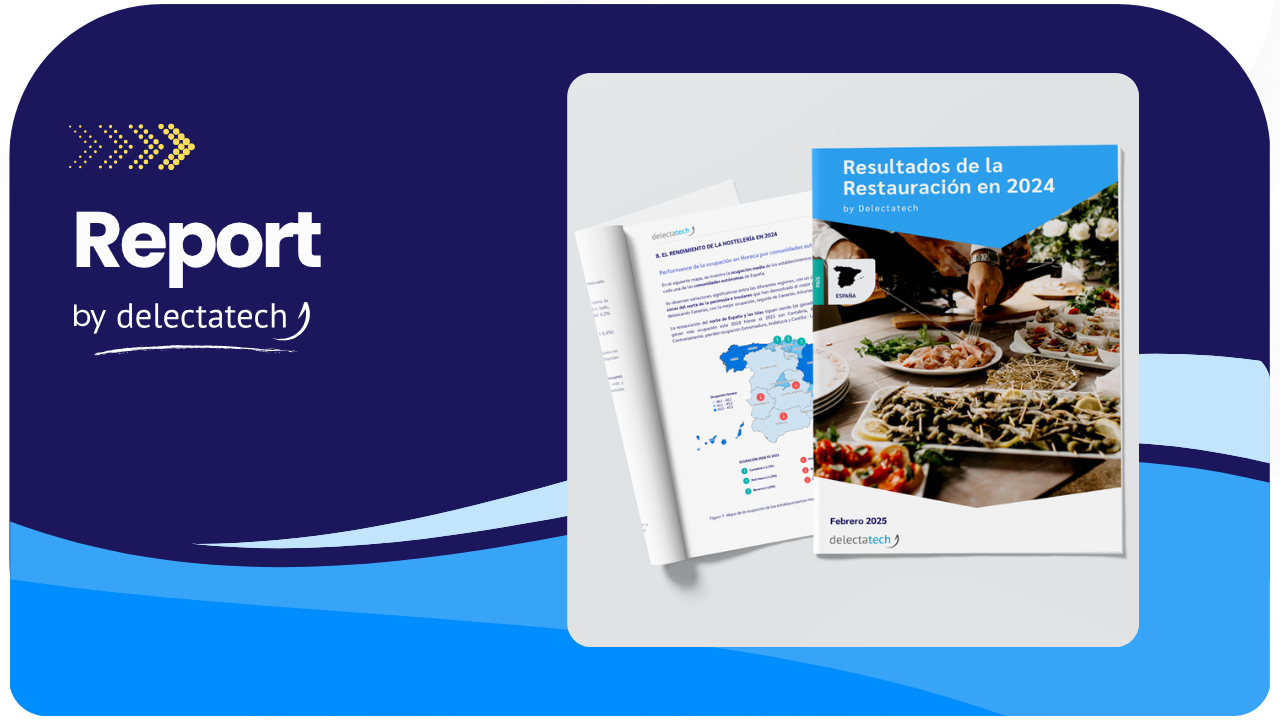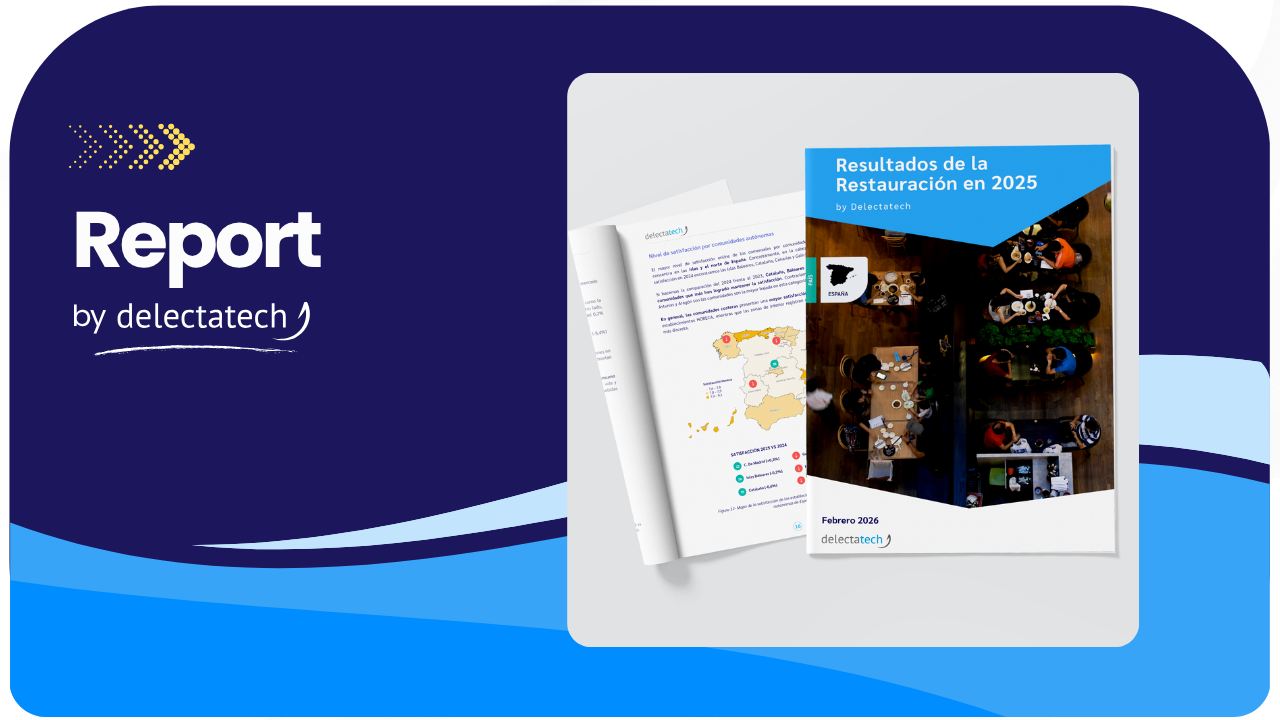
REPORT | Summer 2026 in Foodservice: Results in Spain and International Trends.


The foodservice market is a large, fragmented market that never stops changing. Restaurants, bars, coffee shops, hotels, takeout spots, convenience stores, and countless other points of consumption all belong to an environment where manufacturers and distributors need more than a good sales force to grow.
To increase sales, the real challenge is knowing where the opportunity is, which establishments are the best fit for each product, which areas have the most room to grow, and which part of the market is already covered.
Plenty of companies rely on their CRM, their sales history, or the knowledge their team has built over the years. All of that has value, but it rarely gives you a full view of the foodservice industry. There may be potential customers you have never identified, territories you have barely worked, categories whose behavior is shifting, or sales priorities based on an incomplete read of the market.
This is where Delectatech comes in, helping foodservice manufacturers and distributors use foodservice market data to make smarter strategic and operational decisions.
The term foodservice refers to the entire market for food and beverages consumed away from home, such as hotels, restaurants, coffee shops, and far beyond. In practice, the industry also includes bars, food chains, independent operators, takeout businesses, hybrid formats, and any other point where consumers buy or eat food and drinks outside the home.
That is why, when we talk about the foodservice market, we are not talking only about the restaurant industry in the strict sense. We are talking about an entire ecosystem where operators, distributors, manufacturers, food chains, independent businesses, and new consumption formats all coexist.
The foodservice market covers food and beverages consumed away from home, and it overlaps with other dynamics tied to delivery, takeout, convenience, and even food retail, especially when shoppers are looking for ready-to-eat solutions.
So does that mean foodservice and food retail are the same thing?
No. Foodservice and food retail follow different business models, but they increasingly compete for the same consumption occasions. A consumer who used to grab a quick meal at a bar or restaurant might now solve it with prepared food from the grocery store, delivery, vending, or a convenience format. For manufacturers and distributors, understanding this crossover makes it easier to see where demand is actually moving.
The foodservice industry is made up of thousands of establishments with very different profiles. Selling to a neighborhood coffee shop is nothing like selling to a high-check restaurant, a food chain, a hotel, a brunch spot, or a fast-food location.
Each type of business has its own needs, purchasing rhythms, consumption occasions, and level of affinity for a given product. On top of that, the market is in constant motion. New locations open, others close, menus get rewritten, prices change, new categories appear, and consumer habits keep evolving.
Growing in the foodservice industry means making a long chain of decisions. Which areas to work, which establishment types to prioritize, which categories to push, which customers to visit first, and which part of your account base needs a second look.
The problem shows up when those decisions are made with only a partial view of the market. A company can have a sales team, a CRM, a full sales history, and years of accumulated industry knowledge, and still not know with any precision how many establishments fit its offering, where they are, or how much of the market is still untouched.
The foodservice market is made up of thousands of establishments with wildly different profiles. There are independent restaurants, food chains, bars, coffee shops, hotels, takeout businesses, brunch spots, premium venues, and hybrid formats.
Each one operates on its own logic. They change their menus, their prices, their hours, their consumption occasions, their level of digitization, and their ability to draw demand. And while all of that is happening, some locations open, others close, some reinvent their concept, and others start working categories they never carried before.
Why is this market so hard to measure?
Because most of the useful information is not sitting neatly in a single database. It is scattered across menus, reviews, photos, directories, websites, digital listings, and behavioral signals. For a company selling into foodservice, that makes the market very hard to read if all you have is internal data and accumulated sales know-how.
A lot of companies confuse their account base with the market itself. They assume that if they have a CRM with thousands of accounts and a long sales history, that must be a solid representation of the foodservice industry.
But no CRM shows the entire market. What it shows is the company’s own sales history.
To make matters worse, that account base can be full of duplicate customers, closed establishments, accounts with missing information, mislabeled locations, or records that no longer match current priorities. It can also leave out plenty of high-potential establishments that were never identified or never made it into the CRM in the first place.
So a large CRM does not guarantee you actually know the market?
Exactly. A CRM helps you manage sales activity, but it rarely tells you which part of the market is covered and which part is not. To answer that question, you have to compare your current account base against a much broader read of the industry.
A team’s knowledge, time in the field, and sales history all help build a commercial instinct for reading the market. But what happens when that instinct becomes the only basis for decisions?
When fresh, external information is missing, companies tend to repeat the same patterns, such as visiting the same areas, prioritizing the same types of locations, doubling down on categories that worked in the past, or launching campaigns aimed at segments that are far too broad.
In foodservice, deciding on instinct alone tends to create three recurring problems:
Growth is not just about more sales activity. It is about pointing that activity in the right direction.
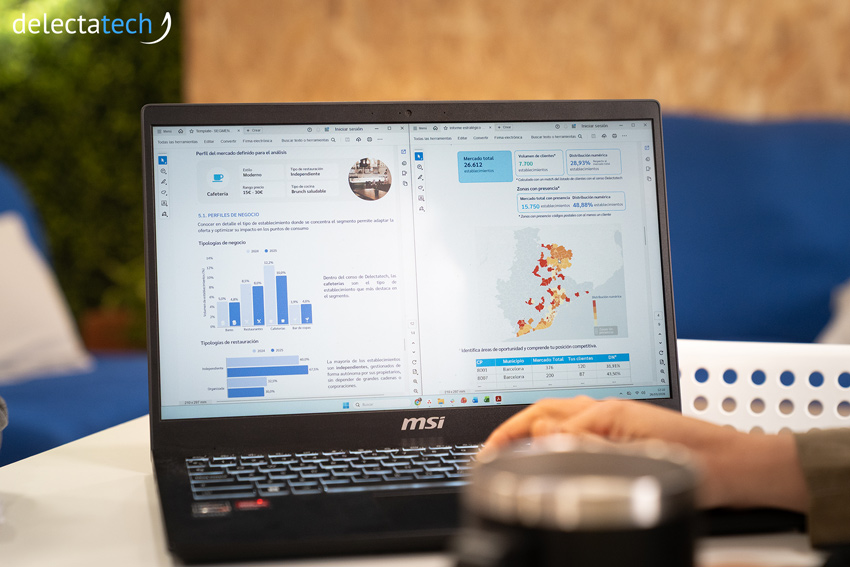
To sell more, and sell better, in the foodservice market, a company needs data that supports specific decisions.
Names of establishments or lists of contacts are not enough on their own. For information to be useful, it has to let you segment, compare, prioritize, and act. In other words, it has to help you answer commercial and marketing questions with a sharper read of the market.
The foodservice market does not behave the same way everywhere. The same category can perform very differently depending on the city, the neighborhood, the density of establishments, the type of tourism, the income level of the area, or the local consumption profile.
That is why territorial data is necessary for smarter prioritization.
A company should be able to analyze:
Should every area get the same sales effort?
Not necessarily. Two areas can have a similar number of establishments but very different potential for a specific category. If a company cannot tell that difference apart, it ends up spreading its resources too evenly and losing conversion opportunities.
Area-level data helps you decide where to start, where to reinforce the team, where to activate campaigns, and where to review your coverage.
Once the market has been identified, the next question is usually how much of that market the CRM already covers.
This is where account, coverage, and numeric distribution data come in. For manufacturers and distributors, this view makes it possible to compare current customers against the potential market and uncover opportunities that never show up if you only look at the CRM.
Some of the data you need includes:
What do these data points give you?
They let a company know not just how many customers it has, but what percentage of the market it cares about is actually being worked. It can also reveal areas where it believes it has strong coverage, but where its presence among relevant establishments is lower than expected.
Once that information is on the table, the whole approach to managing growth changes. You can prioritize the areas with the most upside, improve CRM quality, organize sales routes, and decide where to concentrate your prospecting effort.
The starting point is knowing the establishments themselves, what type of location they are, where they are, and what characteristics they have.
Some of the most telling establishment-level data points include:
Why does this matter?
Because two establishments can sit in the same neighborhood and belong to the same industry, yet have very different commercial value for a company. A product might be a perfect fit for a coffee shop with high morning turnover and make almost no sense in a high-check restaurant built around dinner service.
Establishment data lets you move from a generic classification to a far more useful segmentation, which is what drives better strategic and operational decisions.
Beyond knowing which establishments exist, it is important to understand what they sell. In foodservice, the menu changes constantly. New categories appear, menus get updated, prices shift, and operators add products that respond to new consumption habits.
For manufacturers and distributors, this information makes it easier to understand how their portfolio fits within the market.
Some of the most relevant data points include:
What does this kind of information let you decide?
It lets you identify establishments where a category already has a presence, spot areas where a product has room to grow, review your price positioning, or prepare launches with more context.
For example, a beverage company might need to know which locations fit consumption occasions like breakfast, or brunch. A food manufacturer might want to pinpoint establishments where a specific category is gaining ground. And a multi-product distributor might need to understand which part of its portfolio fits best in each type of location.

Foodservice generates an enormous amount of information every single day. Establishments update their menus, collect thousands of reviews, post hundreds of photos, change their hours, adjust prices, add products, and reshape their culinary offering. The problem is that this information is usually scattered and rarely shows up in formats that are easy to analyze.
That fragmentation leads almost every manufacturer and distributor in the foodservice market to ask the same question.
How can I know where the best opportunities are when the market never stops changing?
The answer lies in organizing that information and turning it into structured data you can actually use to make commercial, marketing, and strategic decisions.
Delectatech is a company specialized in extracting, processing, and structuring digital information from the foodservice market, helping manufacturers and distributors understand the industry better, make smarter business decisions, sharpen their commercial and marketing strategies, and close the gap in market knowledge.
Delectatech delivers a complete view of the market through a live, continuously updated census of the foodservice market, built from digital information and processed with artificial intelligence and machine learning.
This census makes it possible to analyze establishments, products, areas, categories, and market signals to answer questions like:
This data lets foodservice manufacturers and distributors make smarter business decisions and gain a competitive edge over companies that do not have this kind of market visibility.
The information you need to understand the foodservice market is not always easy to capture and analyze. Often it lives in a review, in a photographed menu, on a website, in an image of the location, in a directory, or in a description written by the establishment itself.
What value does a review, a menu, or a photo really have for a company selling into foodservice?
It has value when you can analyze it at scale. A review can indicate satisfaction, the type of experience, or the products mentioned. A menu can reveal categories, prices, and specific items. A photo can help detect features of the establishment, brands on display, or positioning signals.
Delectatech uses artificial intelligence to process that information and turn it into variables a business can act on. The goal is to capture and structure data that lets manufacturers and distributors make smarter business decisions, sharpen their commercial and marketing strategies, and close the gap in market knowledge.
For example, starting from unstructured information, Delectatech can help identify:
A list of establishments can be useful, but it has plenty of limitations. It tells you which locations exist, but it does not always explain what they do, what they sell, how they behave, or whether they fit a specific sales strategy.
The value appears when that list is enriched and continuously updated until it becomes a living map of the foodservice market as a whole.
What is the difference between a database and a living map of the market?
A database can stay static. A living map lets you watch how the market evolves, which establishments change, which categories gain ground, which areas concentrate the most opportunity, and which signals you should weigh before deciding.
In Delectatech’s case, this map lets you move from a generic view of the foodservice industry to a far more operational read. Drilling down into the detail, it tells you how many locations there are in a city, what type of establishments they are, which products they work, and how they relate to each company’s potential market.
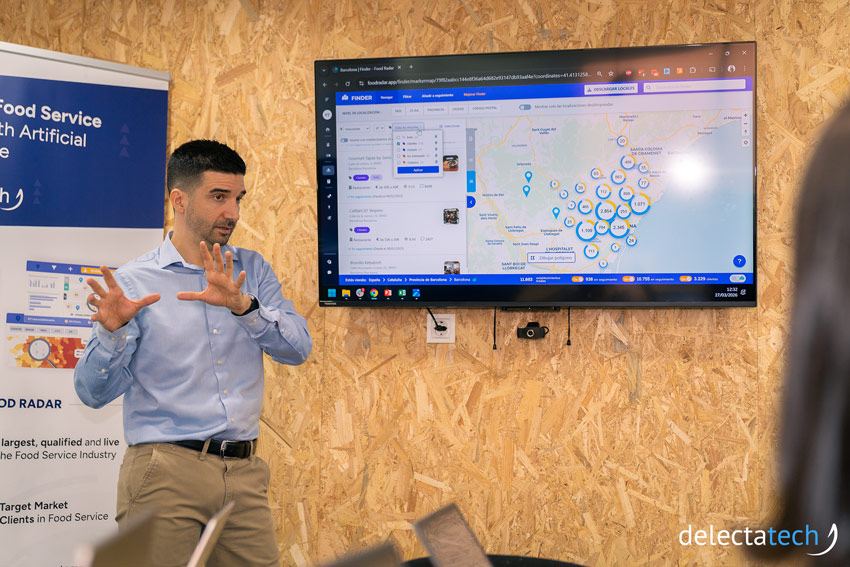
Delectatech’s technology is built on a process that combines digital information capture, AI processing, and structuring the data establishment by establishment.
Delectatech has been conducting AI research applied to the foodservice industry for over 8 years, and its AI engine has received international awards from Microsoft, IBM, or Telefónica, among others.

The result is a living market base that lets you analyze the foodservice market from a range of angles:
The first step is capturing information from a range of digital sources across the foodservice market.
Those sources can include:
This information gives manufacturers and distributors a much broader and more accurate picture of the environment they compete in.
Once the information is captured, Delectatech processes it with machine learning, deep learning, and natural language processing models.
This processing makes it possible to interpret data that was never meant to be analyzed in the first place. A comment, a menu, or a photo can hold valuable information, but it has to be read, classified, and turned into comparable data.
Natural language processing helps interpret text such as reviews, descriptions, or menus. Image analysis models, in turn, extract visual signals that complement the written information.
Can AI really read a sentence as positive or negative depending on context?
Yes, when it is trained to interpret nuance. A customer saying “the beer was cold” is not the same as saying “the soup was cold.” The same word can carry a completely different meaning depending on the product, the context, and the intent behind the comment.
This kind of analysis makes it possible to extract reliable signals about satisfaction, products, categories, or customer experience.
After processing, the information is structured establishment by establishment. This is the part that turns scattered data into a base you can actually use to make decisions.
Each location can be enriched with variables such as:
This structuring makes it possible to compare establishments against one another and group them by commercial criteria.
For example, a company might want to pinpoint restaurants with seafood on the menu in a specific area, coffee shops with a strong fit for breakfast products, bars with a certain beverage presence, or establishments showing signals that match a specific category.
Without this layer of structure, the information would still be there, but it would be far harder to use it to decide.
The foodservice market is in constant motion. An establishment can close, rework its menu, open a new line of business, change prices, or start working in a category it never carried before.
That is why a useful read of the foodservice market cannot rely on a single snapshot. It needs recurring updates and the ability to track changes over time.
Delectatech refreshes its data on a quarterly basis to maintain accurate traceability across the foodservice market and to continuously analyze how the market evolves: which locations change, which categories gain or lose ground, and which areas reveal new opportunities.
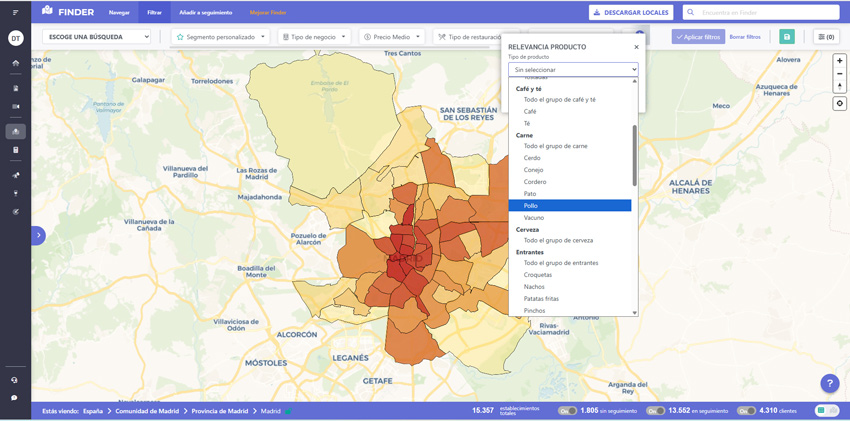
FoodRadar is Delectatech’s technology platform for analyzing the foodservice industry using data structured by establishment, area, category, and market behavior.
It is a foodservice data analytics software built to help you understand the market, set commercial priorities, and connect external data to your sales and marketing activity.
That said, FoodRadar should not be confused with a generic restaurant management tool. It is not a foodservice software built for reservations, POS, order taking, or the day-to-day running of a single location. It is designed for manufacturers and distributors that sell to foodservice establishments.
So is FoodRadar a database of establishments?
Not just that. A database can be limited to serving up records. FoodRadar lets you work with those records enriched, segmented, and connected to business variables: type of location, address, average check, products on the menu, categories present, activity signals, affinity with a portfolio, and relationship to the client’s current account base.
That is why, more than a simple foodservice data analytics app, FoodRadar acts as a market intelligence layer that helps you interpret the industry and turn that read into strategic and operational action.
Delectatech organizes its foodservice solutions around each company’s business objective. Not every company selling into foodservice is at the same stage, and they do not all need to solve the same problem first.
Some need to size up their potential market. Others need to review the quality of their account base. Others are looking for more organized prospecting. And others need to better understand how their categories, products, or competitors are evolving within the foodservice industry.
That is why Delectatech’s solutions are structured into four distinct areas: SEGMENT, AUDIT, PROSPECTING, and MARKET INSIGHTS.
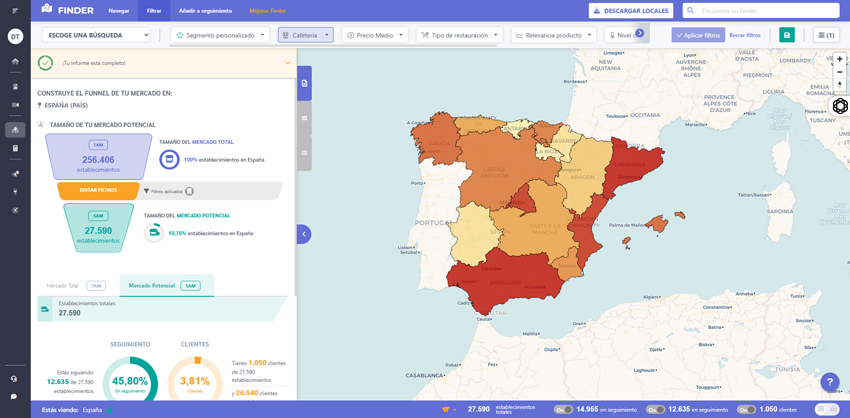
SEGMENT is built for manufacturers and distributors that need a clearer view of where their ideal customers are, how much volume they represent, and which areas concentrate the most opportunity for each product or category.
This solution tends to be the starting point when a company does not have a clear picture of the size, location, and characteristics of its potential market.
At Delectatech, this segmentation is built on a foodservice census covering millions of establishments worldwide: from restaurants, bars, and coffee shops to hotels, retail, takeout, leisure, and impulse formats.
Many companies work with segmentations that are incomplete, manual, or out of date. That makes it hard to know exactly where the establishments that fit their portfolio are, and how many they represent within the market.
As a result, sales and marketing can end up working with audiences that are too broad, areas with less upside, or customer profiles that are poorly aligned with the category they are trying to grow.
SEGMENT analyzes the market across multiple variables to build a precise segmentation. To do that, Delectatech:
With SEGMENT, a company can see where it makes the most sense to concentrate its sales and marketing resources. It can also do a better job of preparing expansion campaigns, product launches, or territory-by-territory plans.
Instead of treating the foodservice market as one homogeneous block, SEGMENT helps you break it down into groups of establishments with the strongest affinity for each business objective.
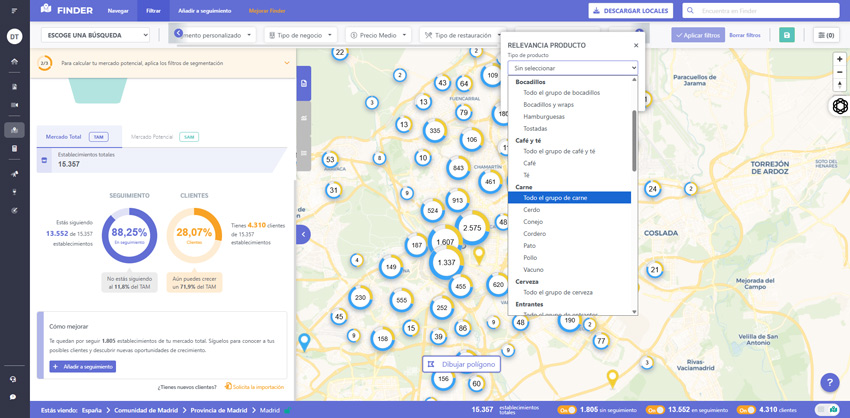
AUDIT is built for manufacturers and distributors that already have an account base or CRM, but need to check whether it accurately reflects the market they want to work.
Many companies assume their main challenge is winning new customers, when a big part of the opportunity can actually lie in understanding the account base they already have.
Over time, an account base can pile up duplicates, closed locations, mislabeled accounts, incomplete records, or establishments that no longer match current priorities.
When that happens, the CRM loses its value as a decision-making tool. The sales team can spend time on low-value accounts, leadership can have a distorted sense of coverage, and marketing can activate campaigns against less precise segments.
With AUDIT, Delectatech connects its system to the client’s account base and turns it into a base that is genuinely useful for deciding. The process can include:
When AUDIT is combined with SEGMENT, a company can compare its current account base against the defined potential market. That reveals how many target establishments are already customers, how many are not, and where there is room to grow numeric distribution.
AUDIT helps you review where you are leaving upside on the table, which areas are poorly covered, which accounts to prioritize, and which part of the CRM needs to be cleaned up before you keep ramping sales activity.
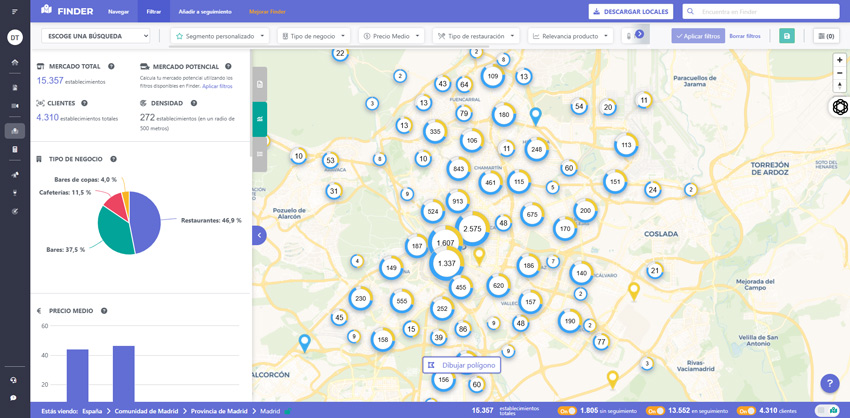
PROSPECTING is built for companies that want to win new customers in the foodservice market, but need a clearer, more structured prospecting strategy.
Some companies want to grow but do not know where to start. Others are already prospecting, but they do it with manual processes, outdated databases, or sales routes built out of habit.
Finding new customers in foodservice can be slow and expensive if you are not starting from a reliable data source and a well-defined segmentation.
The problem is not always a lack of sales activity. More often, the problem is that the activity is aimed at establishments with a poor fit, low priority, or a lower probability of converting.
Once the potential market has been identified with SEGMENT, PROSPECTING turns that segmentation into qualified leads. Delectatech identifies specific establishments that match the defined criteria and organizes them to make sales action easier.
The solution lets you segment by variables such as:
On top of that, Delectatech can generate optimized routes for the sales team using those qualified leads.
PROSPECTING helps you decide which establishments to visit first, which areas to work, how to distribute sales activity, and which leads make the most sense for a specific campaign.
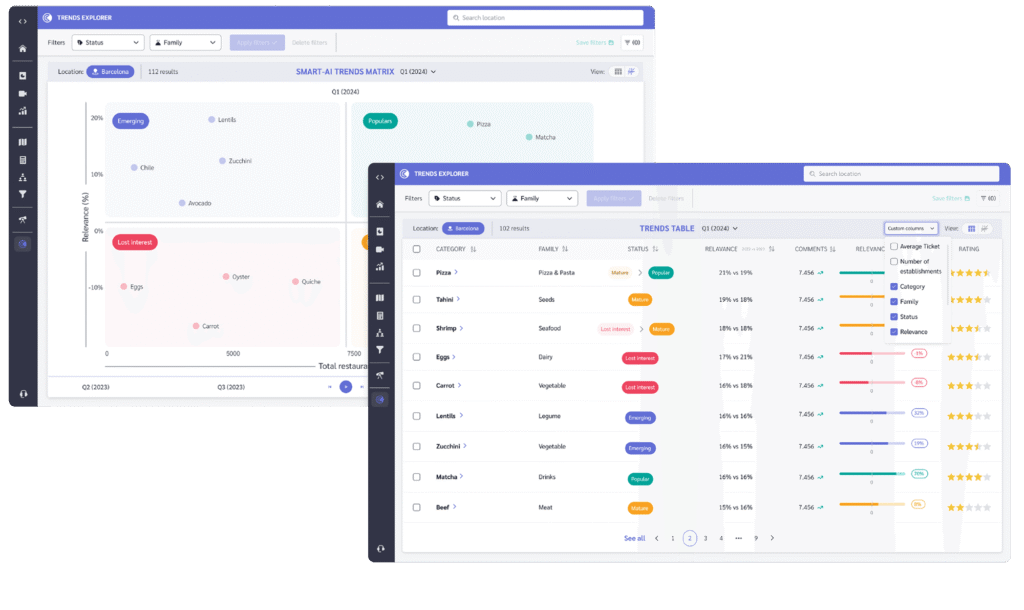
MARKET INSIGHTS is built for marketing, executive leadership, trade, or product teams that need a better understanding of how a category is evolving within the foodservice industry.
Some decisions cannot be solved just by knowing which customers to go after or how to organize the account base. Sometimes the question is different: what is happening with a category, how is a product behaving, what signals is the market sending, or how is a brand positioned against its competitors.
Many portfolio, pricing, distribution, or communication decisions get made with scattered inputs, such as internal sales numbers, the sales team’s perception, one-off studies, or a partial view of the market.
MARKET INSIGHTS lets you work with a more quantitative read of the market and the competition, so you can understand which categories are gaining ground, which products are shifting in behavior, and which territories are sending signals worth a closer look.
With MARKET INSIGHTS, Delectatech monitors the client’s categories and products, competitors included. The solution lets you:
MARKET INSIGHTS helps you make better decisions on pricing, distribution, communication, and portfolio. It also lets you prepare launches with more context, review categories that are losing traction, or spot opportunities before they become obvious in your internal data.
Taken together, this solution lets marketing, trade, product, and leadership work from a more complete read of foodservice and how the market behaves.
Delectatech is built for companies that sell into the foodservice market, and it is an especially strong fit for three profiles:
Foodservice distributors typically work with a broad portfolio, a large number of customers, multiple sales territories, and teams that have to prioritize their time carefully. For this kind of company, the challenge is not only finding new establishments, but understanding which part of the market is already covered, which areas have room to grow, and which categories can be worked more effectively.
What questions can Delectatech help a distributor answer?
For a distributor, Delectatech can add value in segmentation, account-base auditing, prospecting, and market analysis. In other words, SEGMENT, AUDIT, PROSPECTING, and MARKET INSIGHTS.
Manufacturers with a sales force need to decide where to concentrate their team, which customers to visit, which products to push, and how to support launches or area-based campaigns.
Unlike many distributors, who tend to work with broader portfolios, manufacturers usually need segmentations focused on specific products or categories. For example, a brand might want to know which establishments fit a new SKU, which areas have the strongest affinity for a category, or how much of its potential market is already being covered by its team.
Why does a manufacturer with a sales force need more than its sales history?
Because sales history shows what has already happened, but it does not always reveal which establishments are still outside the account base, which territories are being worked below their potential, or which categories are shifting within the foodservice industry.
For this profile, Delectatech can help:
For manufacturers with their own field force, all four solutions usually make sense, though the starting point will depend on the main objective: sizing the market, reviewing the account base, prospecting, or analyzing categories.
Manufacturers without a sales force sell into the foodservice market through distributors, partners, or third-party agreements. In these cases, the need is to understand the market better in order to guide decisions on expansion, distribution, portfolio, or sales support for their partners.
If a manufacturer has no team in the field, why does it need foodservice data?
Precisely because it depends more on other players to reach the market. Without its own visibility into where the opportunity is, it becomes harder to negotiate with distributors, prioritize areas, prepare launches, or know whether a category has room to grow in certain types of establishments.
For this profile, Delectatech can help:
For manufacturers without a sales force, the most common solutions tend to be SEGMENT and MARKET INSIGHTS, because they make it possible to understand the market and its categories without relying solely on the information that comes through third parties.
The foodservice market will remain a large, fragmented, fast-changing market. For manufacturers and distributors, that means an increasingly clear need to understand where the opportunity is before deciding how to grow.
Sales teams no longer have to work in the dark. Marketing should not be segmenting on hypotheses alone. Leadership should not be deciding on expansion, portfolio, or coverage with a partial view of the market. And business intelligence should not depend solely on internal data when growth also lives outside the current account base.
Delectatech answers that need by providing structured foodservice data, artificial intelligence, and a platform designed to turn scattered information into commercial and strategic decisions. From market segmentation to CRM auditing, prospecting, and category analysis, its goal is to help manufacturers and distributors understand the foodservice industry better and, as a result, become more competitive.
Request your demo and find out how to sell much more with Delectatech.
Try FoodRadar for free and discover all its potential.